Multivariate Functions
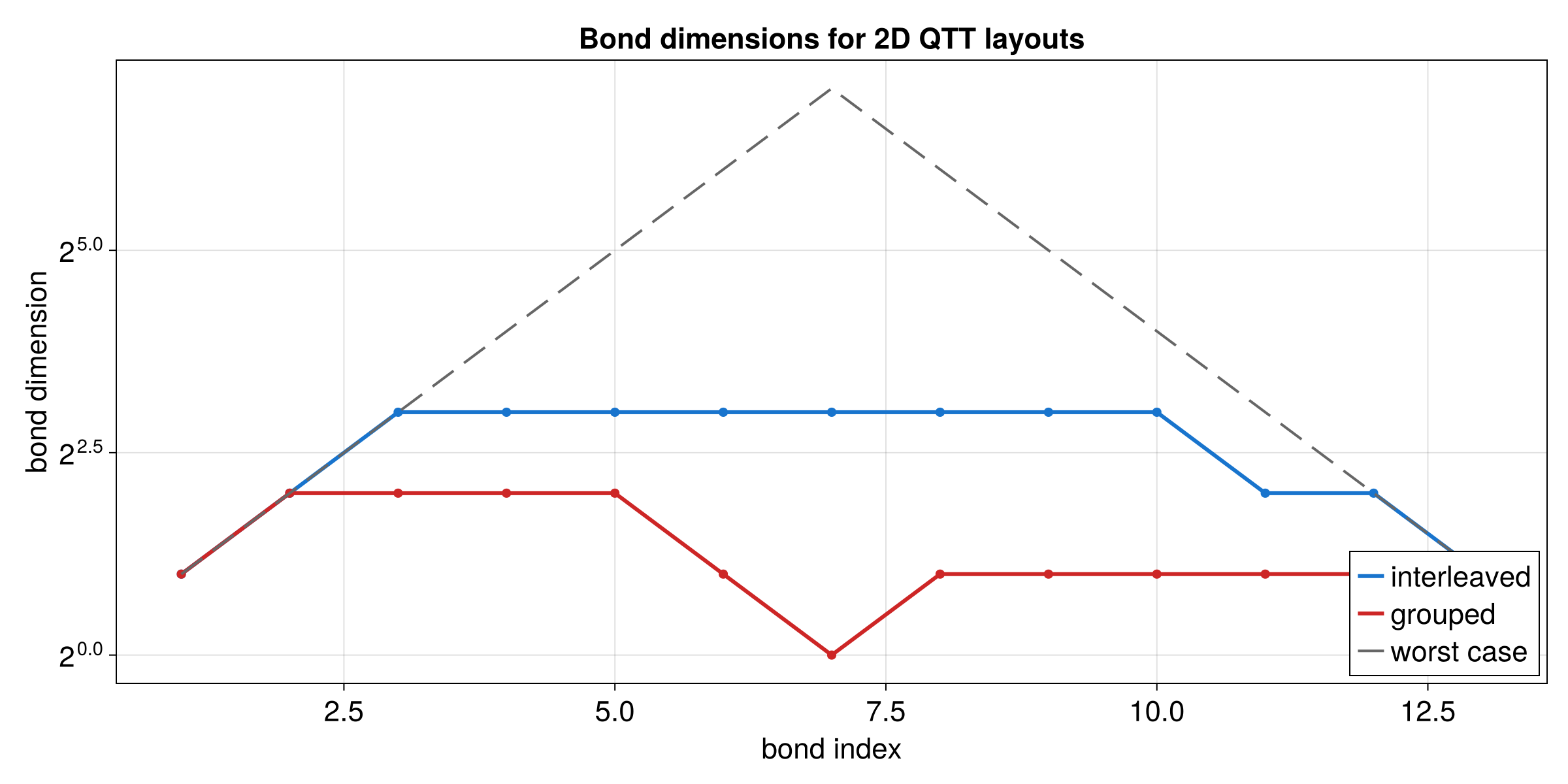
A multivariate QTT stores a function such as f(x, y). The sites can be
grouped by variable or interleaved. Grouped means all bits for one variable
come first; interleaved means the first bit of each variable appears before the
second bit of each variable. The best choice depends on the function.
Runnable source: docs/tutorial-code/src/bin/qtt_multivariate.rs
Key API Pieces
Use one bit-depth entry per variable when building a DiscretizedGrid.
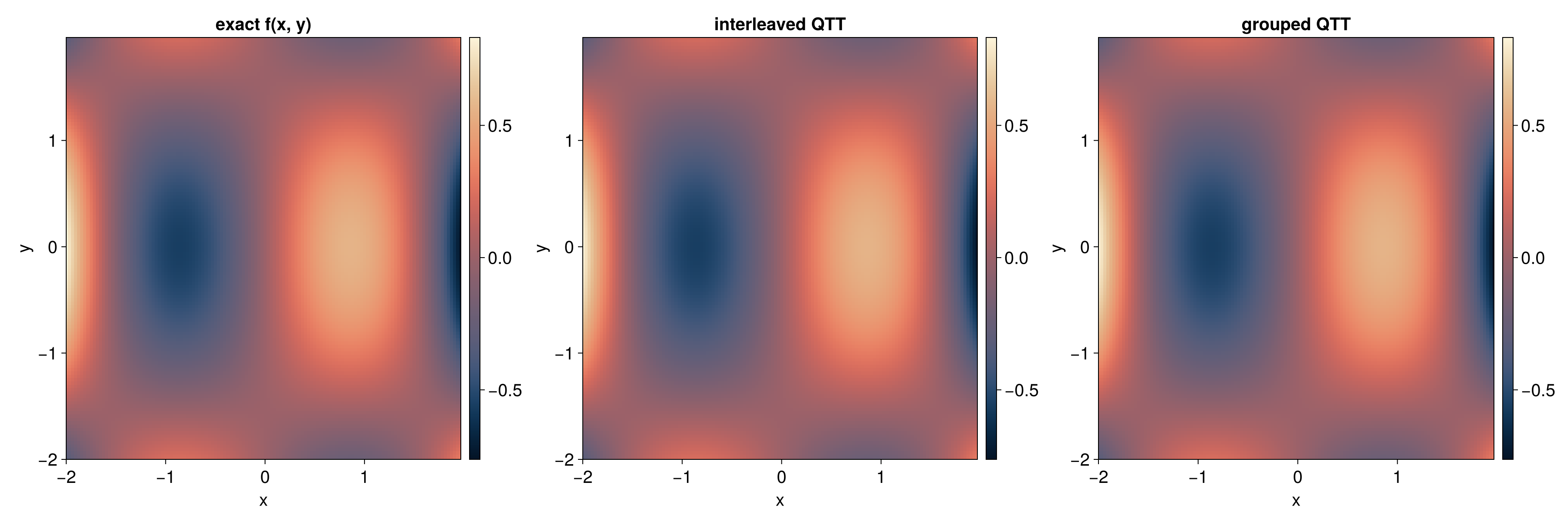
The target function is f(x, y) = x * cos(x) * cos(y).
fn main() -> anyhow::Result<()> {
use tensor4all_quanticstci::{
    pointwise_coordinate_batch,
    quanticscrossinterpolate_batch, DiscretizedGrid, QtciOptions, UnfoldingScheme,
};
let grid = DiscretizedGrid::builder(&[7, 7])
    .with_variable_names(&["x", "y"])
    .with_bounds(-2.0, 2.0)
    .include_endpoint(false)
    .with_unfolding_scheme(UnfoldingScheme::Interleaved)
    .build()?;

let f = |coords: &[f64]| -> f64 {
    let x = coords[0];
    let y = coords[1];
    x * x.cos() * y.cos()
};
let options = QtciOptions::default()
    .with_unfoldingscheme(UnfoldingScheme::Interleaved)
    .with_verbosity(0);
let (qtt, _ranks, _errors) = quanticscrossinterpolate_batch(&grid, pointwise_coordinate_batch(f), None, options)?;

assert!((qtt.evaluate(&[0, 0])? - f(&[-2.0, -2.0])).abs() < 1e-6);
Ok(())
}
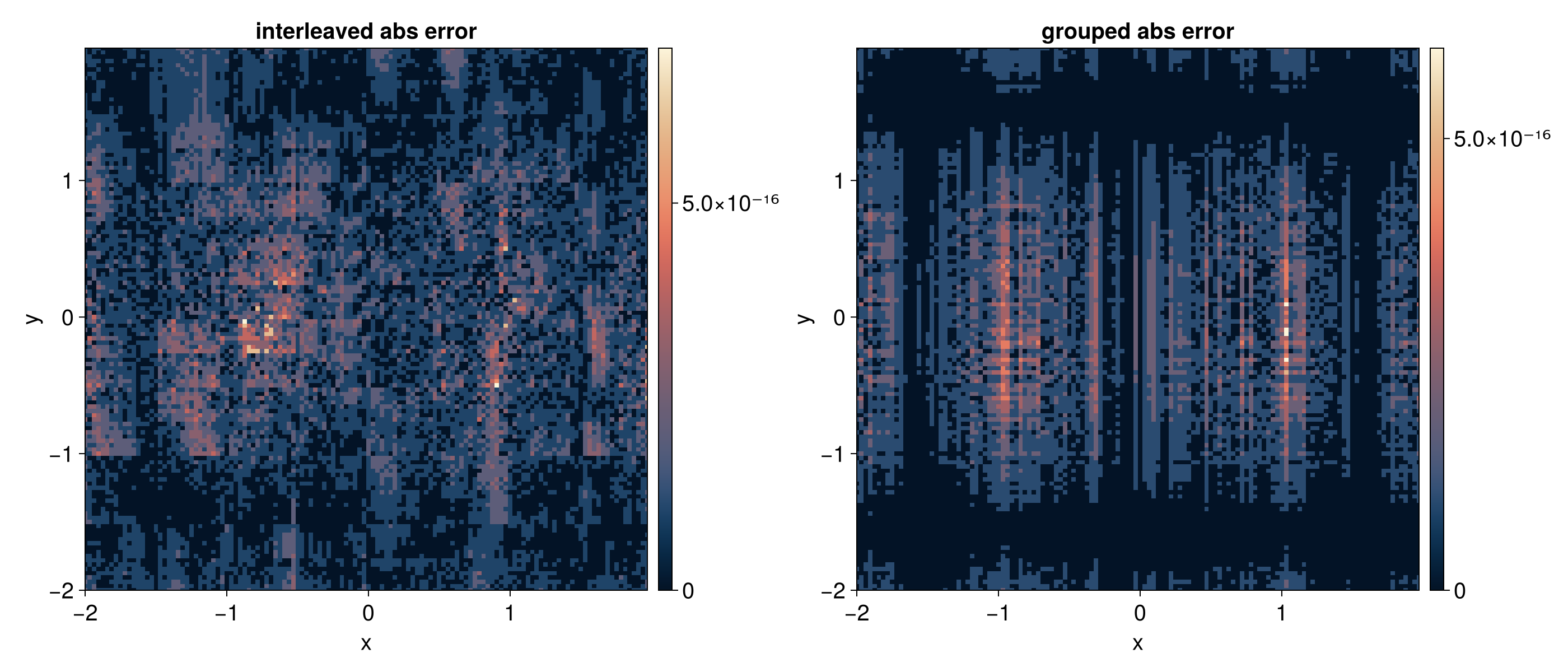
The tutorial binary builds a QTT for f(x, y) = x * cos(x) * cos(y) and compares
the two layouts visually.
What It Computes
The example builds a two-dimensional QTT with both layouts and compares the values, errors, and bond dimensions.